
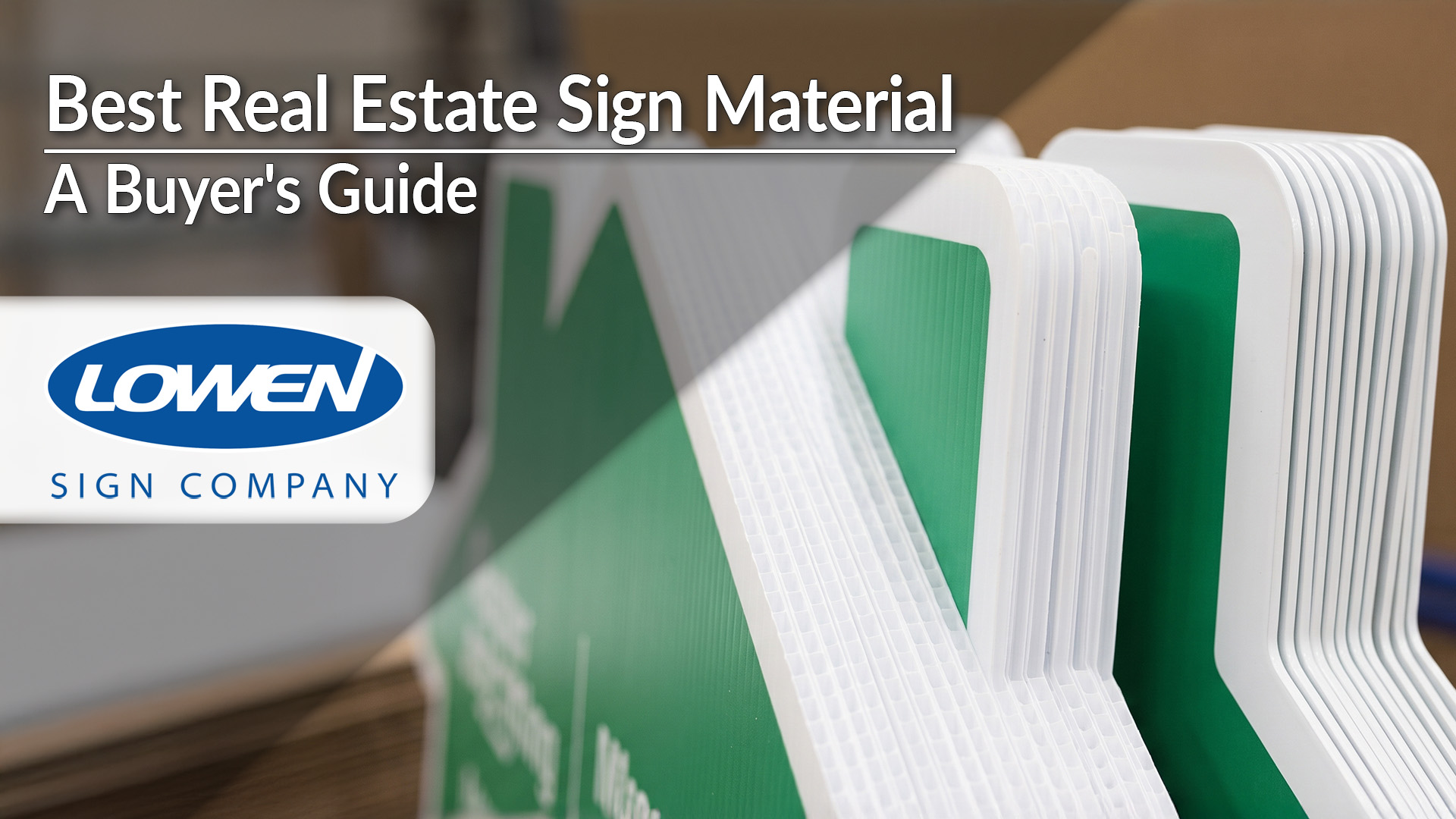
Best Real Estate Sign Material: A Buyer's Guide
Steel, corrugated plastic, PVC, polyethylene, aluminum composite, or aluminum? A side by side look at what each one is good for, and the sizes to match.
The right sign material is the difference between a panel that still looks sharp at closing and one that fades, warps, or cracks halfway through the listing. The best choice depends on how long the sign stays out, the weather it faces, and your budget. Here is how Lowen's real estate panel materials compare, so you can match the material to the job.
What are real estate signs made of?
Lowen produces real estate sign panels in six materials: steel, corrugated plastic, PVC, polyethylene, aluminum composite, and aluminum. Most come in more than one thickness, which lets you dial in the balance of rigidity, weight, and cost:
Corrugated plastic: 4mm and 10mm
PVC: .100
Polyethylene: .050, .090, and .15
Aluminum: .040 and .063
Aluminum composite: 3mm and 6mm
Steel: 24 gauge and 20 gauge
Thicker or heavier-gauge panels feel more rigid and premium; thinner panels cost less and weigh less for high-volume use. The rest of this guide walks through when each material makes sense.
Corrugated plastic (coroplast)
Corrugated plastic is the lightweight, cost-effective workhorse of real estate signage. At 4mm it is easy to handle and economical for high-volume listings and quick turnarounds; 10mm adds rigidity when you want a sturdier feel. It is a strong pick when you order in quantity and rotate signs often. If you want a step up in stiffness and longevity, look at polyethylene or aluminum.
PVC
PVC is a rigid plastic panel with a smooth, solid face, offered at .100. It sits a step up from corrugated plastic: more rigid, with a flat surface rather than the fluted construction of coroplast, so the panel reads cleaner up close. It is a good middle option when you want a more substantial panel than coroplast without moving to metal.
Polyethylene
Polyethylene is a solid plastic panel that sits between corrugated plastic and metal. Offered in .050, .090, and .15, it gives you a smoother, more rigid panel than coroplast while staying lighter than aluminum. The heavier thicknesses hold up well to repeated handling, which makes polyethylene a practical middle option for agents who want durability without moving all the way to metal.
Aluminum and aluminum composite
When you want a premium, rigid panel, aluminum is the answer. Solid aluminum comes in .040 and .063, with .063 being the stiffer of the two. Aluminum composite (a rigid panel with a solid core between aluminum faces) comes in 3mm and 6mm and stays notably flat and professional-looking. These materials suit luxury listings, longer-term installs, and any situation where the sign needs to project a high-end, durable impression.
Steel
Steel panels, in 24 gauge and 20 gauge, are the most rugged option. The steel sign panel carries a limited three-year warranty against peeling and fading, so it holds its look through weather and time. Steel is the choice when maximum durability matters most.
What size should your real estate sign be?
Size should be proportional to the property and readable from the street. The most common real estate size is 18"x24", with 24"x30", 24"x24", 30"x24", and 12"x24" also widely used. Larger formats like 48"x48" and 48"x96" come into play for commercial and builder or job-site signage. A sign that is too small on a large lot gets lost; one that is too large on a small lot overwhelms the home, so match the format to the listing.
How to choose the best material for your listing
Weigh four things: how long the sign stays out, the climate it faces, the visibility you need, and your budget. For high-volume, short-run listings, corrugated plastic keeps costs down. For a more durable everyday panel, PVC, polyethylene, or aluminum steps it up. For luxury positioning and longer installs, aluminum or aluminum composite looks and lasts the part. For maximum durability, steel is the top of the range. Whatever you choose, matching it to your brand keeps every listing consistent, which our pillar guide on custom real estate signs covers in depth.
Order the right material for the job
Every Lowen panel is made in-house in the USA, backed by 76+ years of manufacturing, with orders produced in as little as three days. Compare materials in the Sign Panels Product Catalog, spec a full setup in the Complete Yard Sign Units Product Catalog, and see placement tips in our real estate sign placement guide.
Compare Sign Panel Materials and Order Yours
Frequently Asked Questions about Real Estate Sign Material:
What is the best material for a real estate sign?
It depends on the job. Corrugated plastic for high-volume, short-run listings; PVC or polyethylene for a more rigid everyday panel; aluminum or aluminum composite for luxury and longer installs; steel for maximum durability.
What materials does Lowen make real estate sign panels in?
Six: steel, corrugated plastic, PVC, polyethylene, aluminum composite, and aluminum. Most are offered in more than one thickness or gauge.
What is the difference between corrugated plastic and polyethylene?
Corrugated plastic is fluted and lightweight, built for volume and quick turnaround. Polyethylene is a solid panel: smoother and more rigid, and it handles repeated use better, while still weighing less than aluminum.
Are steel real estate signs worth it?
Steel is the most rugged option in the range, and the steel sign panel carries a limited three-year warranty against peeling and fading. It suits agents who want a panel that keeps its look across many listings.
What is the most common real estate sign size?
18"x24". Other widely used sizes are 24"x30", 24"x24", 30"x24", and 12"x24", with 48"x48" and 48"x96" used for commercial and job-site signage.
Does a thicker panel always mean a better sign?
Not always. Thicker or heavier-gauge panels feel more rigid and premium, but thinner panels cost less and weigh less, which matters when you are ordering in volume and rotating signs often.