
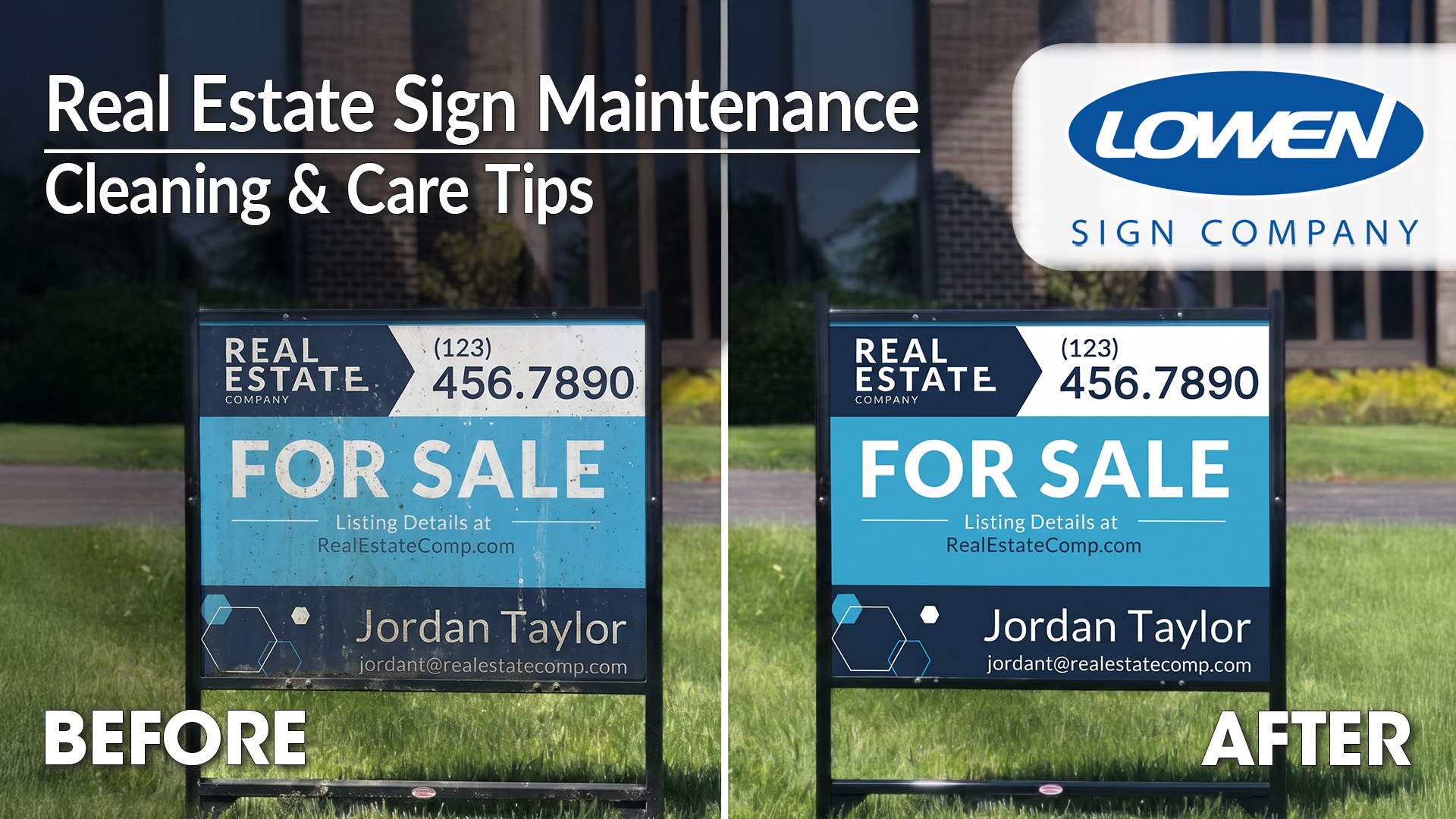
Real Estate Sign Maintenance: Care and Cleaning
Gentle cleaning, safe storage between listings, and the material choices that decide how many seasons a panel actually survives.
A faded, dirty sign says something about the agent standing behind it, and it is not the message you want in a seller's yard. A little upkeep keeps your signs sharp through the whole listing and stretches how many seasons you get out of each one. Here is how to clean real estate signs safely, prevent damage, and make them last.
How do you clean a real estate sign?
Keep it simple and gentle. Rinse loose dirt off first, then wash the panel with mild soap and water using a soft cloth or sponge. Rinse again and let it dry, or wipe it down, before storing or reposting. Regular light cleaning does more for a sign's life than an occasional aggressive scrub, so check on your posted signs periodically, especially ones in high-traffic areas, near dirt roads, or on heavily landscaped properties where they collect more grime.
What should you avoid when cleaning signs?
Skip anything abrasive or harsh. Scouring pads, stiff brushes, and gritty cleaners scratch the surface and dull the print. Strong solvents can attack inks and finishes, so leave them out. Be cautious with pressure washers: high pressure can lift graphics or damage lighter panels, so if you use one at all, keep it low and at a distance. When in doubt, mild soap, water, and a soft cloth are the safe choice for every panel material.
How do you store signs between listings?
Storage is where a lot of signs quietly get ruined. Keep panels flat in a dry place out of direct sunlight, and leave them in their packaging when you can to prevent scratches and scuffs. Stacking panels with nothing between them, or leaning them where they can bow, leads to warping and edge damage. A little care between listings means the sign you pull out for the next property still looks new.
How do you make real estate signs last longer?
Longevity starts before the first cleaning: it starts with the material. Heavier, more rigid panels stand up to handling and weather better than lightweight ones, so match the material to how hard the sign will be used (our guide to the best real estate sign material compares the options). For the toughest conditions, the steel sign panel carries a limited three-year warranty against peeling and fading. Pair a durable panel with gentle cleaning and smart storage, and one sign serves you across many listings.
Signage built to hold up
Lowen builds real estate sign panels in-house in the USA, backed by 76+ years of manufacturing, with orders produced in as little as three days. Compare durable options in the Real Estate Sign Panels Product Catalog, and keep every sign consistent with your brand using our pillar guide on custom real estate signs.
Frequently Asked Questions about Real Estate Sign Maintenance
How do you clean a real estate sign?
Rinse off loose dirt, wash with mild soap and water and a soft cloth, rinse again, and let it dry. Gentle, regular cleaning is best.
What should you not use to clean a sign?
Avoid abrasive pads, gritty cleaners, and harsh solvents, and be careful with pressure washers, which can lift graphics or damage lighter panels.
How should I store real estate signs between listings?
Flat, dry, out of direct sunlight, and in their packaging when possible to prevent scratches and warping.
How long do real estate signs last?
It depends on the material, handling, and care. Heavier, more rigid panels last longer, and the steel sign panel carries a limited three-year warranty against peeling and fading.
How do I keep signs from fading?
Choose a durable panel and reflective or printed materials suited to the conditions, clean gently, and store out of direct sun between uses.